
Container rain is one of the most common causes of moisture damage in sea freight. The container may look dry at loading and the cargo may be packed correctly, yet the internal environment continues to change during transit.
When warm, humid air cools down inside the container, water droplets can form on the roof and sidewalls. These droplets may fall onto cartons, pallets and products. The result can be mold, corrosion, wet packaging, odour, staining and rejected goods.

What Is Container Rain?
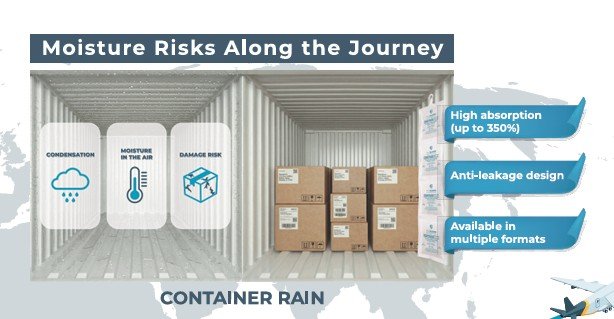
Container rain is condensation inside a shipping container. It forms when moisture in the internal air reaches colder surfaces and turns into liquid water. The droplets can collect on the steel ceiling and walls before dripping onto the cargo.
This is a natural physical process, but its impact can be serious. Even a small amount of condensation can weaken packaging, trigger rust on metal parts or create unacceptable conditions for food, textiles, paper and other sensitive goods.
Why Does Container Rain Occur?
There is rarely one single cause. Container rain usually develops when temperature changes, trapped humidity and cargo moisture combine during the journey.
- Daily heating and cooling changes the amount of moisture the air can hold.
- Humid air may enter the container during loading.
- Wooden pallets, cartons and dunnage can release moisture over time.
- Cargo with natural moisture content can increase humidity during transit.
- Long routes and climate-zone changes create repeated condensation cycles.
A container that looks dry at the origin can still contain enough hidden moisture to create condensation later.
Products Most Affected by Container Rain
Almost any cargo can be affected, but some products are more vulnerable because they absorb moisture, corrode easily or must meet strict quality standards.
- Food products such as rice, flour, coffee, cocoa, nuts and spices.
- Metal components, machinery parts, tools and automotive parts.
- Electronics and electrical components.
- Paper, books, labels and cardboard packaging.
- Textiles, leather goods, furniture and wood-based products.
- Pharmaceutical, hygiene and high-value packaged goods.
How to Prevent Container Rain Before Loading
Use Dry Cargo, Pallets and Packaging
Prevention starts before the doors close. Cargo should be stored in dry conditions, and pallets or packaging materials should not be used if they have absorbed rainwater or warehouse humidity. Wet pallets can release moisture throughout the entire journey.
Load Under Better Conditions Where Possible
Loading during heavy rain or extreme humidity increases the amount of water vapour trapped inside the container. When possible, load under cover and close the container promptly after loading.
Inspect the Container Before Use
The container should be clean, dry and suitable for cargo. Door seals, flooring, roof, sidewalls and previous water marks should be checked before loading. A damaged or wet container increases risk from the start.
Plan the Loading Pattern
A balanced loading pattern supports more stable internal conditions. Avoid unnecessarily tight packing that traps humid air and prevents desiccants from interacting with the container atmosphere.

Use Container Desiccants Correctly
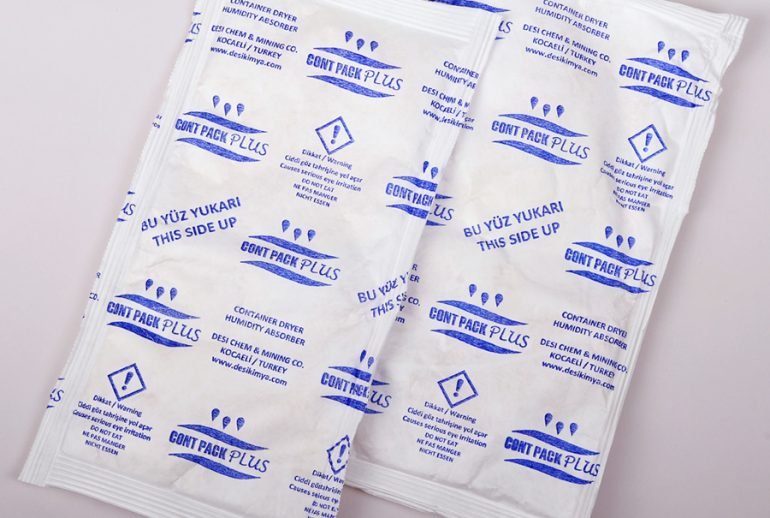
Container desiccants are designed to absorb excess moisture from the air inside the container. By reducing relative humidity, they reduce the chance that moisture will condense on steel surfaces and fall as container rain.
For best performance, the desiccant must be selected according to the cargo, route, transit duration, container size and expected moisture load. Placement also matters: desiccants should be distributed according to the recommended application method so they can interact with circulating humid air.
Why Precautions Sometimes Fail
Container rain can still occur when the amount of desiccant is too low, when the selected desiccant reaches saturation too early or when the units are not placed correctly. A standard recommendation may not be enough for every route or cargo type.
This is why moisture control should be planned as a shipment-specific process, not as a fixed rule applied to every container.
TRUGUARD Solution for Container Rain Prevention
TRUGUARD helps assess the real moisture risk of the shipment and recommend a suitable desiccant type, quantity and application plan. The goal is to reduce condensation risk before it becomes visible at destination.
With the right moisture control plan, exporters can protect cargo quality, reduce claims and support more reliable sea freight operations.
FAQ
Can container rain be completely avoided?
Temperature changes cannot be fully controlled during sea freight, so risk cannot be removed completely. However, correct loading, dry materials and proper desiccant use can significantly reduce the risk.
What is the best way to prevent container rain?
The best approach combines dry cargo, dry pallets, container inspection, suitable packaging, correct loading and container desiccants matched to the shipment.
Does every shipment need container desiccants?
Not every shipment has the same risk. Desiccants are strongly recommended for moisture-sensitive goods, long transit times, humid origins and routes with major temperature changes.
Where should desiccants be placed?
They should be installed according to the product design and container plan, commonly along side walls and areas where humid air circulates. Placement should be adapted to the cargo layout.
Ask TRUGUARD for a container rain prevention plan and get a desiccant recommendation based on your cargo, route and transit duration.