

A container can be sealed correctly and still arrive with damp cartons, softened packaging, mold spots or early corrosion. In many sea shipments, the problem is not a visible leak from outside. It is moisture already present inside the container, combined with temperature changes during the journey.
Understanding this process is essential because moisture damage often develops silently. By the time the doors are opened at the destination, there may be limited room for correction. The goal is to control the conditions before the container is closed.
When a Sealed Container Still Creates Moisture Damage
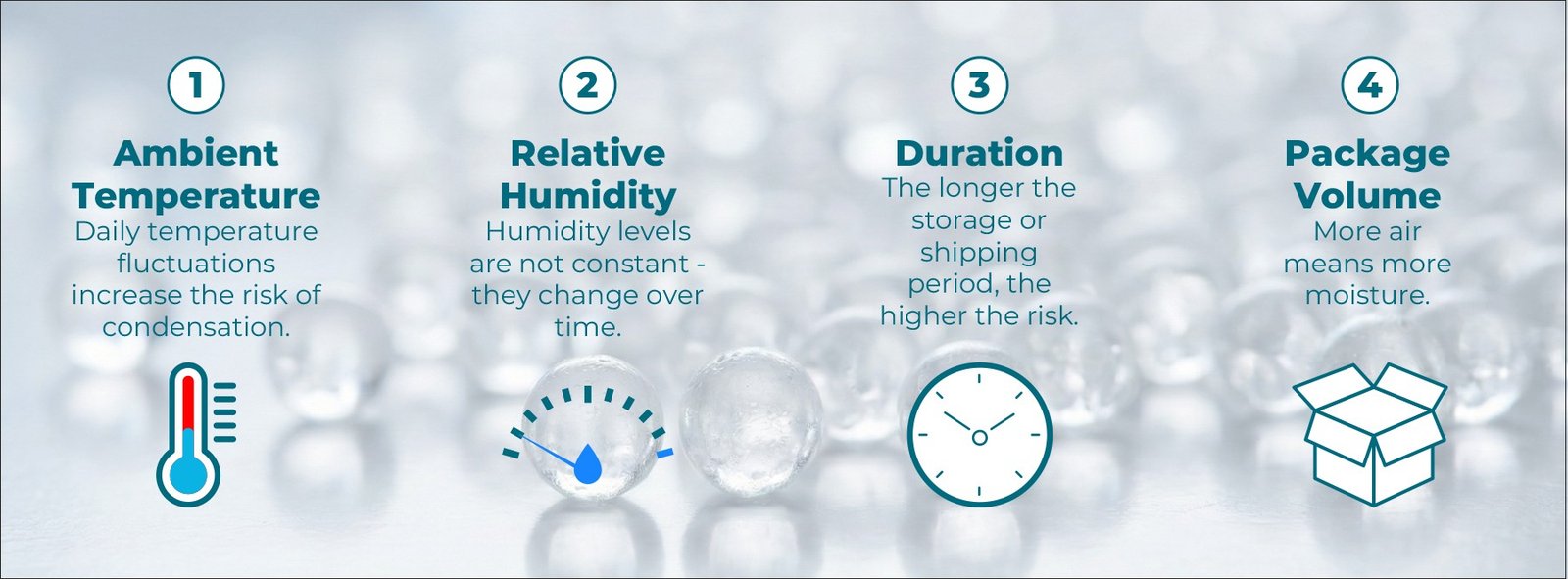
A closed container is not a stable environment. It travels through ports, storage yards, open sea, changing day-night temperatures and different climate zones. As the internal air warms, it can hold more water vapour. When the temperature drops, that water vapour can condense on colder surfaces such as the ceiling and sidewalls.
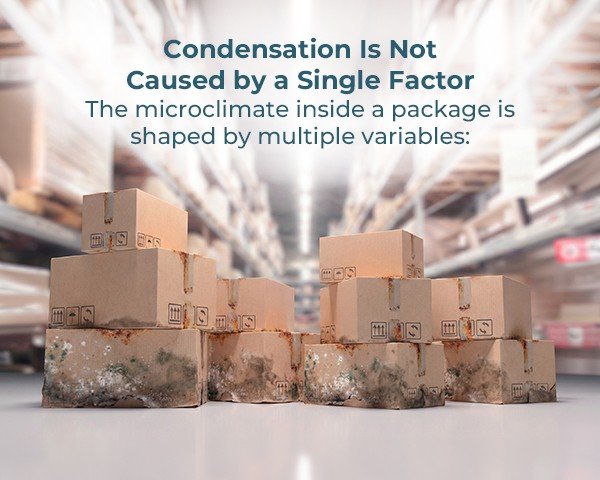
This is why cargo may become wet even when the container appears structurally sound. The moisture source may be the cargo, the pallets, the packaging or humid air trapped during loading.
What Really Happens Inside the Container?
During transit, the container repeatedly heats and cools. Warm, humid air rises. When it meets colder steel surfaces, condensation begins to form. Droplets collect on the roof and walls and may eventually drip onto the cargo. This is commonly called container rain.
Container rain is not usually a single event. It is a repeated cycle. Moisture evaporates, condenses and accumulates again as the container moves through changing conditions. The longer the route and the greater the temperature variation, the higher the risk.
The Hidden Sources of Moisture in Sea Freight
Moisture inside the container rarely comes from one place. Several small sources can combine into a serious risk.
- Cargo such as paper, textiles, agricultural goods, coffee, cocoa, rice and wood-based products can release moisture during transit.
- Cardboard boxes, wooden pallets and dunnage can hold moisture even when they look dry.
- Humid air can be trapped inside the container during loading, especially in warm or rainy conditions.
- A container that was washed, stored in a humid yard or not inspected properly may add extra risk.
Each source may seem minor on its own. Together, they create the moisture load that must be managed throughout the shipment.

What Wet Cargo Means for the Business
Moisture damage is not only a packaging issue. It can affect product quality, customer acceptance and supply chain reliability. Mold can make food, textiles or packaging unacceptable. Corrosion can reduce the value of metal components and machinery parts. Damp cartons can lose strength and fail during handling.
The commercial result may be rejected shipments, claims, delays, replacement costs and damaged customer relationships. For exporters and logistics teams, preventing moisture is usually less costly than dealing with a failed shipment.

How to Stop Cargo From Getting Wet During Sea Shipping
Start With Dry Cargo and Dry Packaging
Cargo should be stored in dry conditions before loading. Packaging, pallets and dunnage should not be exposed to rain, wet floors or uncovered outdoor storage. If the moisture starts inside the shipment, it becomes much harder to control later.
Inspect and Prepare the Container
Before loading, the container should be checked for holes, door seal problems, wet flooring, strong odours, corrosion and signs of previous water exposure. A clean and dry container reduces the starting moisture load.
Load With Air Movement in Mind
Overly dense loading can trap humid air in isolated pockets. Cargo should be arranged in a way that supports reasonable air movement where possible and avoids direct contact with wet or contaminated surfaces.
Use Container Desiccants Based on Real Risk
Container desiccants help absorb excess moisture from the internal air, reducing the amount of water available for condensation. For long routes, climate changes or moisture-sensitive goods, desiccant type, quantity and placement should be selected according to the actual shipment risk.
Why Problems Still Occur Despite Precautions
Many companies already use desiccants but still experience moisture damage. This usually happens when the desiccant capacity is too low, the placement is not suitable, the cargo moisture is underestimated or the route involves stronger climate changes than expected.
Effective moisture control is not about using any desiccant. It is about matching the solution to the container size, cargo type, transit duration, route, packaging and loading conditions.

TRUGUARD Moisture Control Approach
TRUGUARD evaluates shipment conditions before recommending a moisture control setup. The aim is to identify the likely moisture sources, estimate the risk level and match the container desiccant solution to the real journey.
This practical approach helps exporters reduce condensation, protect packaging strength, prevent mold and corrosion, and improve shipment reliability from departure to destination.
FAQ
Why does cargo get wet in a closed shipping container?
Cargo often gets wet because moisture trapped inside the container condenses when temperatures change. The source may be humid air, pallets, packaging or the cargo itself.
Is wet cargo always caused by container leakage?
No. Leakage is possible, but many wet cargo cases are caused by internal condensation, commonly known as container rain.
Can desiccants completely eliminate moisture risk?
No solution can remove every risk in every shipment, but the correct desiccant capacity and placement can significantly reduce condensation and moisture-related damage.
When should container desiccants be used?
They are especially useful for long sea routes, humid loading locations, temperature-changing routes and moisture-sensitive cargo such as food products, textiles, paper, electronics and metal parts.
Request a TRUGUARD container moisture analysis before loading and protect your cargo with a desiccant solution matched to your shipment conditions.