
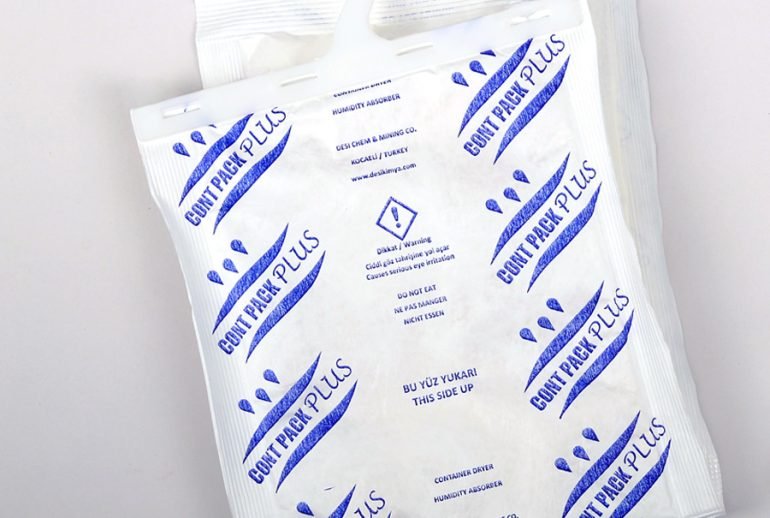
Choosing a high-capacity desiccant is important, but it is not enough on its own. If the units are installed in the wrong places or concentrated in only one area, moisture control may be uneven and condensation can still occur.
Container desiccant placement should be planned according to how moisture moves inside the container, how the cargo is loaded and how long the route will take.
Why Placement Matters
Inside a container, warm moisture-laden air tends to rise. When the temperature drops, condensation often develops on the ceiling and upper sidewalls. Areas with poor airflow can also create local humidity pockets.
For this reason, desiccants should be installed where they can interact with circulating humid air. The aim is to absorb moisture before it reaches the dew point and turns into droplets on the container structure.
Where Container Desiccants Work Best
Along the Side Walls
Side-wall installation is commonly used because it allows desiccants to interact with air moving inside the container. It also keeps the units separate from direct cargo pressure and supports wider humidity control across the container length.
Distributed Across the Container
Desiccants should not be concentrated in only one corner unless the application plan requires it. Even distribution helps reduce humidity differences between the front, middle and door-end areas of the container.
Near the Door Area When Risk Is Higher
The door area may experience more air exchange and temperature variation. Depending on the route, cargo and loading pattern, additional units may be recommended near the doors to strengthen protection in that zone.
According to the Product Fixing Method
Different desiccant products may use hooks, adhesive points, hanging systems or other fixing methods. The installation should always follow the product design and TRUGUARD recommendation so the units remain secure throughout transport.
Placement Mistakes to Avoid
The most common problem is not using desiccants, but using them in a way that limits their performance. Avoid application mistakes that reduce contact with humid air or create uneven protection.
- Do not leave desiccant units loose inside the container.
- Do not place units where cargo can crush, block or damage them.
- Do not concentrate all units in a single area unless the shipment plan requires it.
- Do not ignore the door area on high-risk routes or long transit times.
- Do not assume one fixed quantity and layout will work for every shipment.
How Quantity and Placement Work Together
Correct placement cannot compensate for insufficient capacity. If the moisture load is higher than the desiccant capacity, condensation may still form. Likewise, using enough desiccant in the wrong locations can leave some zones underprotected.
Quantity and placement should therefore be planned together. The recommended setup depends on container size, cargo type, packaging, route, climate conditions, transit duration and loading environment.
Practical Application Steps Before Sealing the Container
1. Inspect the Container
Check that the container is clean, dry and free from leaks. Door seals, roof, sidewalls and flooring should be inspected before loading.

2. Review the Cargo and Packaging
Identify moisture-sensitive products and materials that can release moisture, such as wooden pallets, cartons, paper, textiles or agricultural goods.
3. Plan the Loading Pattern
Arrange the cargo to reduce isolated humidity pockets. Avoid blocking the areas where desiccants need to interact with internal air.
4. Install Desiccants After Loading
Install TRUGUARD desiccants according to the recommended placement plan. Ensure units are secure, distributed and not pressed by cargo.
5. Seal Promptly
Once loading and desiccant installation are complete, seal the container promptly to reduce the amount of new humid air entering the space.
Why Results Vary Between Shipments
The same desiccant layout may perform differently from one shipment to another because each shipment has a different moisture profile. Route, climate, cargo moisture, packaging and transit duration all change the risk level.
This is why TRUGUARD evaluates shipment conditions before recommending a placement plan. A tailored setup provides more consistent moisture protection than a one-size-fits-all approach.

FAQ
Is container desiccant placement as important as quantity?
Yes. Quantity determines total capacity, while placement determines how effectively that capacity interacts with moisture inside the container.
Should desiccants be installed before or after loading?
The final installation is usually completed after loading so the units can be positioned securely according to the cargo layout and application plan.
Can I use the same placement plan for every shipment?
A repeated plan may work for similar shipments, but cargo type, climate and transit duration should always be reviewed before applying the same setup.
What should I avoid during installation?
Avoid loose, blocked, crushed or unevenly distributed desiccants. The units must remain secure and exposed to circulating container air.
Request a TRUGUARD desiccant placement plan before shipment and match the installation layout to your cargo, route and moisture risk.