
Using a desiccant is a good start, but the real question is whether it has enough capacity to manage the moisture inside the container for the entire journey. If the capacity is too low, condensation can still form even when desiccants are present.
Container desiccant absorption capacity must be evaluated together with cargo type, packaging, route, climate and transit duration. A long, humid or temperature-changing route needs a different strategy than a short, low-risk shipment.
How Much Moisture Is Inside a Container?
Moisture inside a container is not always visible. It can come from wooden pallets, cartons, paper packaging, natural cargo moisture and humid air trapped during loading.
In high-risk shipments, the total moisture load in a 40ft container can reach several litres and, depending on cargo and route, may require planning for 10 litres or more. This is why choosing by container size alone can be misleading.
Why Absorption Capacity Makes the Difference
Desiccants work by removing moisture from the air, but different materials do this in different ways. Some mainly adsorb moisture onto their surface. Others absorb moisture and convert it into a retained liquid or gel. The difference affects how long the product can continue performing under high humidity.
When capacity is exhausted too early, humidity rises again and condensation may begin. At that point, the container is already in transit and additional protection cannot be added.
How Different Desiccants Compare
Calcium Chloride-Based Desiccants
Calcium chloride-based desiccants are commonly used for container applications because they offer high moisture absorption capacity. In many applications, they can absorb more than three times their own weight in moisture. As calcium chloride attracts water vapour, it forms a brine that is retained by the product design, often as a gel or contained liquid system.
This makes calcium chloride-based desiccants suitable for long transit times, high humidity and challenging sea freight routes where moisture accumulates gradually.
Silica Gel Desiccants
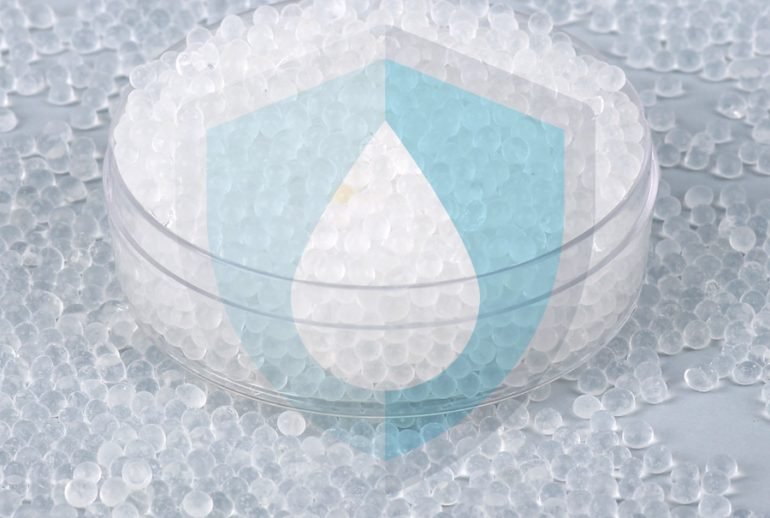
Silica gel typically adsorbs moisture on its surface and is widely used in smaller packaging applications. Its capacity is much lower than calcium chloride-based container desiccants and it can reach saturation sooner under continuous high humidity.
For container-scale moisture control, silica gel may not always provide enough sustained performance for long routes or high-moisture cargo.
Clay-Based Desiccants
Clay desiccants are also adsorption-based and generally offer lower moisture capacity than silica gel. They may be suitable for some lower-risk conditions, but performance can be limited in demanding container environments.
Why Estimating Enough Is Often Misleading
General recommendations based only on container size can be useful as a starting point, but they do not account for the real moisture load. A container of dry plastic goods is not the same as a container filled with wooden pallets, paper, textiles or agricultural products.
Climate and route also matter. A shipment moving through humid ports, tropical conditions or large temperature swings needs stronger protection than a short route with stable conditions.
What Happens When Capacity Is Not Sufficient?
- The desiccant reaches saturation before the shipment ends.
- Relative humidity rises inside the container.
- Condensation forms on cold steel surfaces.
- Packaging becomes damp or weak.
- Mold, corrosion, odour or staining may appear.
- The shipment may be rejected or require reprocessing.
A Better Way to Choose Desiccant Capacity
The right approach is to calculate risk by shipment conditions, not by habit. TRUGUARD reviews the container size, route, transit duration, cargo type, packaging, pallets and loading environment before recommending desiccant type and quantity.
Placement is also important. Even a high-capacity desiccant can underperform if it is blocked, crushed or placed where it cannot interact with humid air. Capacity and placement should be planned together.
TRUGUARD High-Capacity Moisture Control
For many container shipments, TRUGUARD recommends calcium chloride-based desiccant solutions because they provide high moisture absorption capacity and sustained performance under changing conditions. This helps maintain lower humidity levels and reduce condensation risk during sea freight.
The most reliable result comes from matching the absorption capacity to the real moisture load of the shipment.
FAQ
How much moisture can a container desiccant absorb?
It depends on the desiccant material and product design. Calcium chloride-based desiccants can absorb significantly more moisture than silica gel or clay-based products.
Is more desiccant always better?
Not necessarily. The goal is sufficient capacity in the right locations. Too little capacity is risky, but random extra units may not solve poor placement or incorrect product selection.
Why does silica gel perform differently from calcium chloride?
Silica gel mainly adsorbs moisture on its surface, while calcium chloride absorbs moisture and can retain it as brine or gel depending on product design. This creates different performance under high humidity.
How should I choose the correct capacity?
Capacity should be selected according to cargo type, route, transit duration, humidity risk, packaging and container size. A shipment-specific recommendation is more reliable than a fixed rule.
Ask TRUGUARD for a container moisture analysis and select desiccant absorption capacity based on your real shipment conditions, not guesswork.