
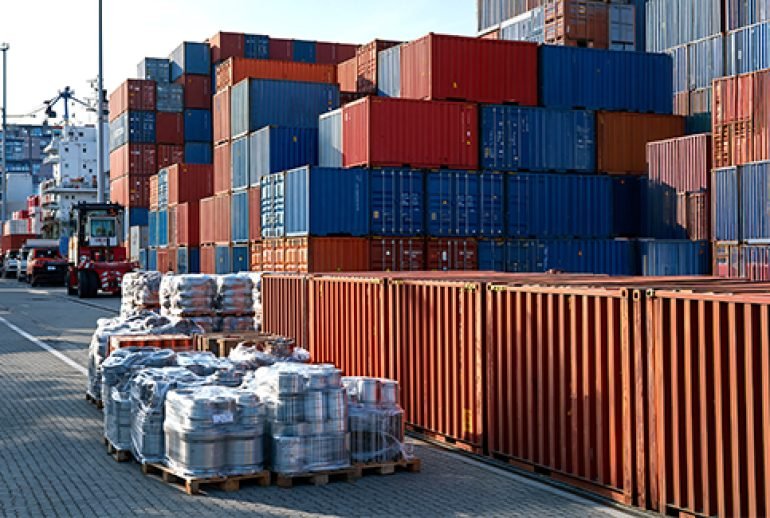
In export shipments by sea, metal products may be exposed to changing temperature and humidity conditions for long periods. A product that leaves the factory in perfect condition can arrive at its destination with signs of corrosion if it is not properly protected.
So how should metal products be packed to reduce these risks? In this article, we cover the seven steps to consider for protecting metal products in sea shipments, from protective packaging preparation to pre-shipment checks.
Why Is Sea Shipment Risky for Metal Products?
In sea transport, metal products are exposed to changing environmental conditions throughout a journey that can last for weeks. Temperature fluctuations, high humidity and condensation inside the container can increase the risk of corrosion on metal surfaces.
Condensation caused by temperature changes, in particular, can lead to moisture build-up inside the packaging and the container. For this reason, protecting metal products against corrosion starts with choosing the right packaging method before shipment.
Protective Packaging Preparation for Metal Products
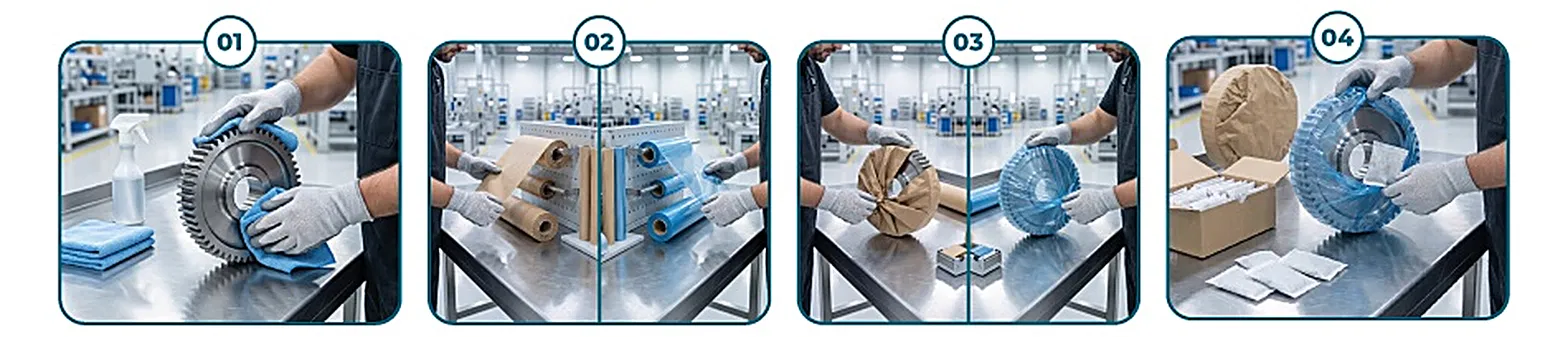
Protection against corrosion starts before the product is placed in the packaging. At this stage, metal surfaces need to be prepared, humidity conditions need to be assessed and suitable protective packaging needs to be selected.
1. Cleaning and drying metal surfaces
Moisture, fingerprints and other residues that can cause corrosion on metal surfaces can pose a risk even before the product is shipped. For this reason, make sure the parts are clean and dry before packaging.
2. Selecting the right VCI packaging
VCI (Volatile Corrosion Inhibitor) packaging helps protect metal surfaces against corrosion. However, to choose the right solution, the metal type, part size, packaging volume, storage conditions and shipping duration should be evaluated together.
Choosing the option that suits the application from among different packaging options such as VCI film, bags and paper is important for protection performance.
3. Sealing the protective packaging properly
For VCI packaging to be effective, the protective environment needs to be maintained as much as possible. Openings or damage in the packaging can cause VCI components to escape from the environment and reduce protection performance.
For this reason, it is important to seal the packaging in line with the application instructions and maintain its integrity.
4. Using desiccants when necessary
In long-duration shipments or in conditions with a high risk of humidity, VCI packaging can be supported with container desiccants.
While VCI helps protect metal surfaces against corrosion, desiccants control the moisture inside the packaging. The type and amount of desiccant to be used should be determined based on the packaging volume and expected shipping conditions.
Pre-Shipment Container Checks
Once the protective packaging is prepared, the products also need to be physically protected during transport. Before shipment, the durability of the outer packaging, the securing of the load and the integrity of the packaging should be checked.
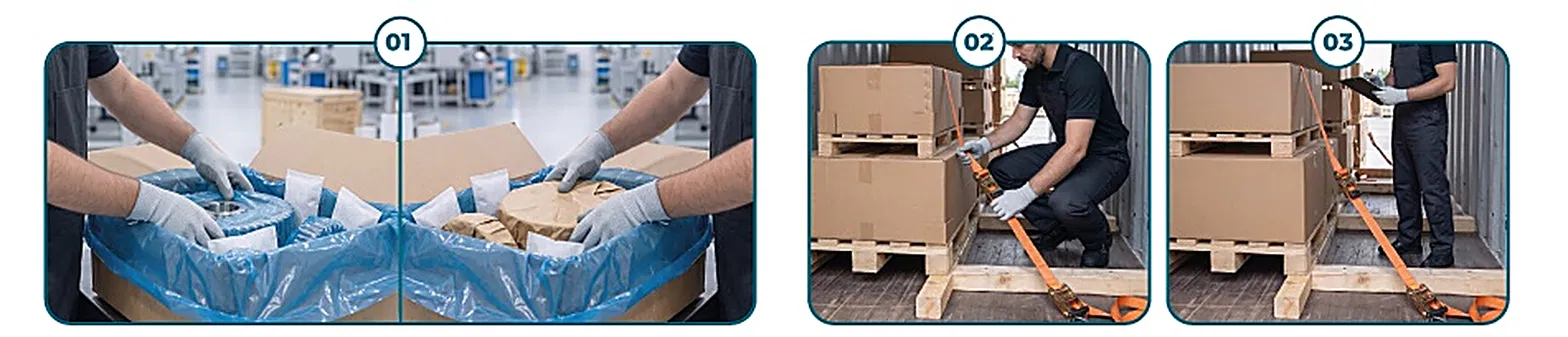
5. Using suitable outer packaging
Supporting the protective packaging with suitable outer packaging such as crates, boxes or pallets helps protect products against impacts that may occur during transport and handling.
When selecting outer packaging, the product’s weight, dimensions and transport conditions should be taken into account.
6. Securing the load for transport
Loads that are not properly secured inside the container can shift during transport. This can cause both physical damage to the products and damage to the protective packaging.
For this reason, loads need to be secured with suitable securing methods.
7. Checking packaging integrity and shipping conditions
Before loading, the packaging should be checked for tears, openings or damage. In addition, make sure the container is dry, clean and in suitable condition against water leakage.
The packaging process is completed by checking the shipping labels and the required handling marks.
Request a solution for your shipment: Share your product type, package dimensions and transit time, and the TRUGUARD technical team will recommend the right combination of VCI packaging and desiccants. Request a solution
Frequently Asked Questions
Why does the risk of corrosion on metal products increase in sea shipments?
In sea transport, temperature changes, high humidity and condensation can create conditions favorable to corrosion on metal surfaces. Not using suitable protective packaging, especially in long-duration shipments, increases the risk.
What should be considered when selecting VCI packaging for export?
When selecting VCI packaging, the metal type, product size, packaging volume, storage conditions and shipping duration should be taken into account. The solution that suits the application should be chosen from options such as VCI film, bags or paper.
Is a desiccant also needed when VCI packaging is used?
VCI and desiccants have different functions. While VCI provides protection against corrosion on metal surfaces, desiccants control the moisture inside the packaging. Depending on the shipping duration, packaging structure and environmental conditions, the two solutions may need to be used together.
Related content: Should VCI and Desiccants Be Used Together?
Conclusion: Protecting Metal Products Starts Before Shipment
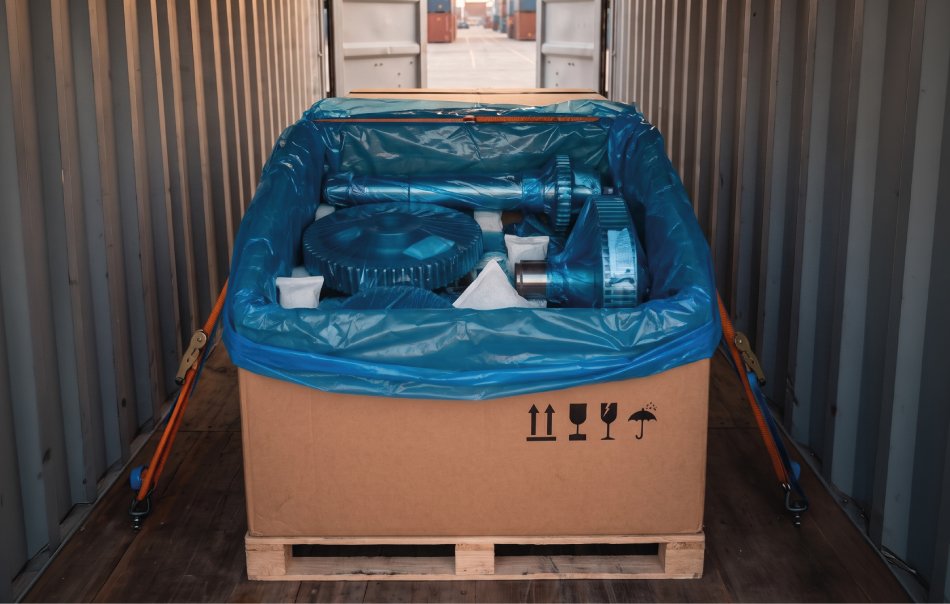
In export by sea, proper packaging plays an important role in ensuring metal products reach their destination safely. Preparing metal surfaces, selecting suitable VCI and moisture protection solutions and completing pre-shipment checks help reduce the risk of corrosion.
At TRUGUARD, we offer VCI packaging and desiccant solutions for different metal types and shipping conditions. You can contact our expert team to evaluate the right protection methods for your products and shipping conditions.
One Response