
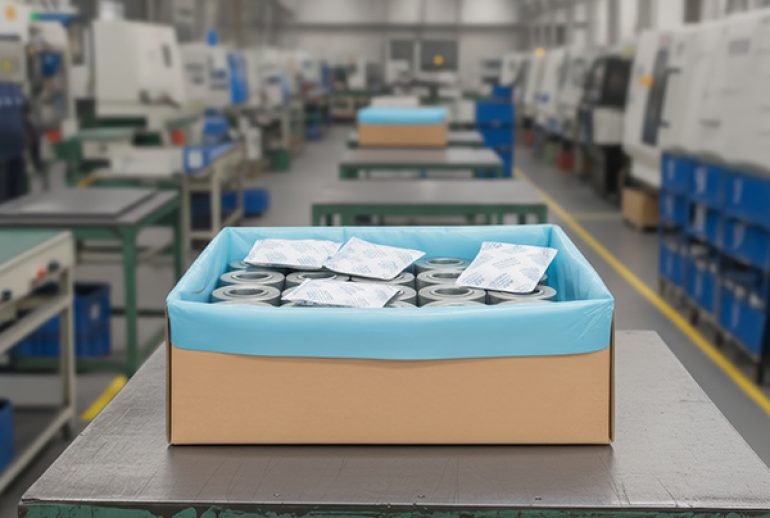
VCI packaging and desiccants are two commonly used solutions for protecting metal products. But when VCI packaging is used, is a desiccant also needed?
The answer lies in the different functions of the two products. When used together under the right conditions, they can complement each other. In this article, we cover the roles of VCI and desiccants, the cases in which they can be used together, and VCI DRY, which meets both protection needs in a single product.
Each Has a Different Role
VCI packaging helps protect the metal surface
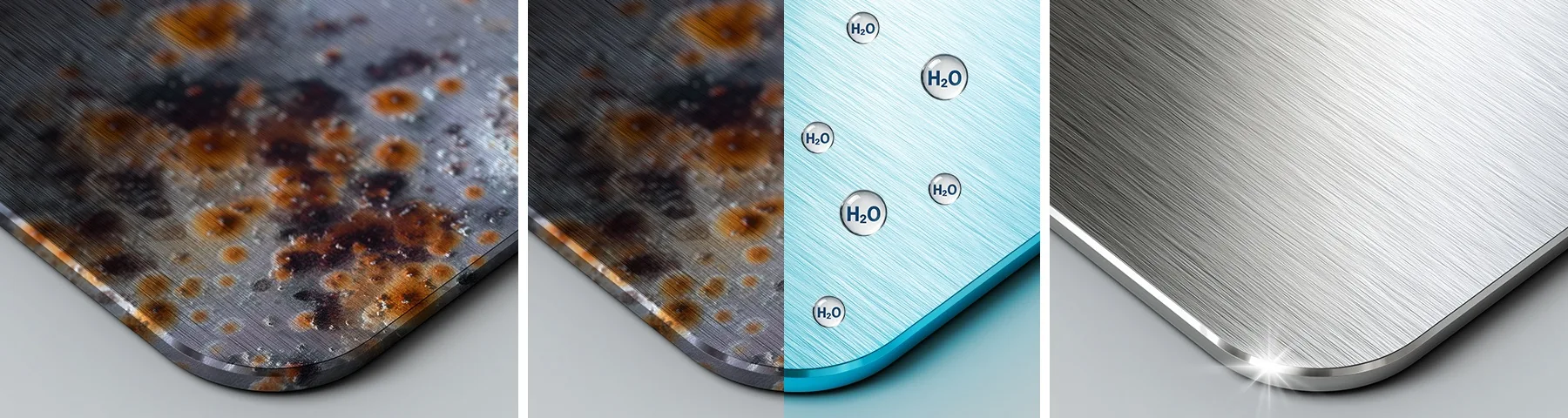
VCI packaging helps reduce the risk of corrosion on metal surfaces thanks to its protective components. However, it does not remove the moisture inside the packaging.
A desiccant controls the moisture inside the packaging
A desiccant, on the other hand, helps control relative humidity by absorbing moisture inside the packaging. It does not form a protective layer directly on the metal surface, and its moisture absorption capacity is limited.
In short, one protects the metal surface while the other controls moisture.
So When Should They Be Used Together?
In applications with a high risk of humidity, the two solutions can complement each other. They can be considered together especially in the following cases:
- Long-duration sea shipments
- Transport between different climate zones
- Long-term storage
- Cases where wooden packaging, which can be a source of moisture, is used
Two Protection Needs, One Solution: VCI DRY
Developed for applications where VCI and moisture control are both required, TRUGUARD VCI DRY combines VCI technology and moisture absorption in a single product.
This way, it helps reduce the risk of corrosion on metal surfaces while also supporting moisture control inside the packaging.
Frequently Asked Questions
Does VCI packaging absorb moisture?
No. VCI packaging helps reduce the risk of corrosion on metal surfaces thanks to its protective components; however, it does not remove the moisture inside the packaging.
Does a desiccant protect the metal surface?
A desiccant helps control relative humidity by absorbing moisture inside the packaging. It does not form a protective layer directly on the metal surface, and its moisture absorption capacity is limited.
In which cases should VCI and desiccants be used together?
In applications with a high risk of humidity, the two solutions can complement each other. They can be considered together especially for long-duration sea shipments, transport between different climate zones, long-term storage, and cases where wooden packaging, which can be a source of moisture, is used.
Can VCI protection and moisture control be provided in a single product?
Yes. TRUGUARD VCI DRY combines VCI technology and moisture absorption in a single product. This way, it helps reduce the risk of corrosion on metal surfaces while also supporting moisture control inside the packaging.
Conclusion: The Right Protection Starts with the Right Solution for the Application
Every shipment has different protection needs. At TRUGUARD, we evaluate our VCI packaging, desiccant and VCI DRY solutions based on your product’s characteristics, packaging structure and shipping conditions.
To determine the right protection method for you, contact our expert team.
One Response